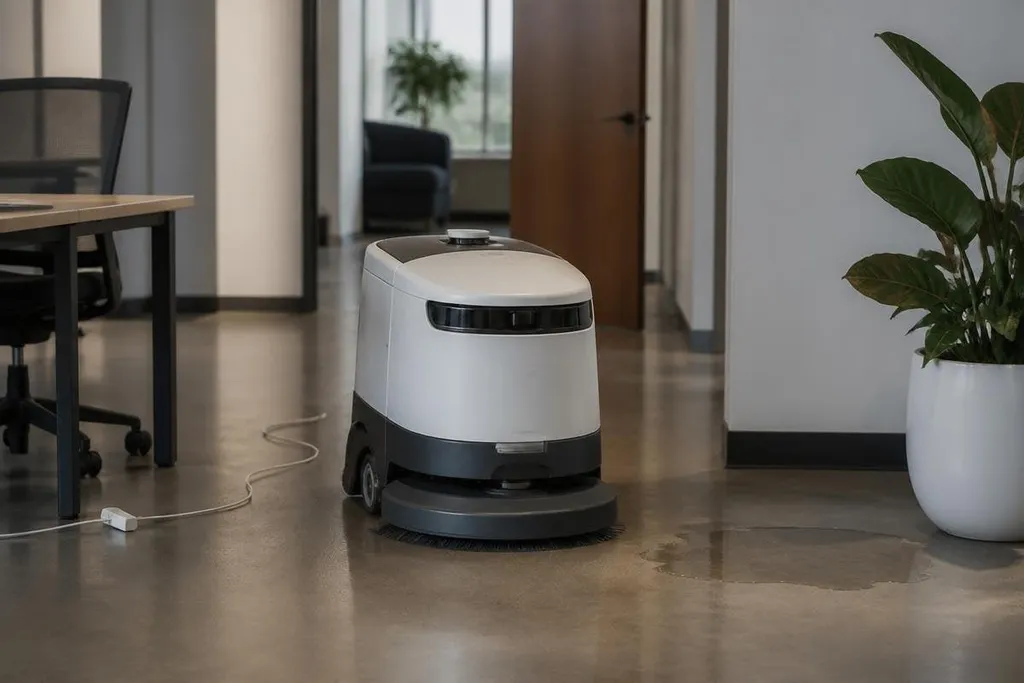
A cleaning robot can map a floor, avoid a chair, and return to its charger. The harder job starts when a cable moves, a door closes, or a wet patch changes the route.
New cleaning robots will be judged by how well they handle those ordinary changes. For facility managers, that matters more than a longer feature list.
Quick read
- A useful robot must recover from blocked routes without regular staff help.
- Floor type, lighting, doors, and cleaning tools shape the result.
- A pilot should measure completed work, human callouts, and missed areas.
What changes on the floor
Most cleaning robots use cameras, LiDAR, or both to build a map and locate themselves. LiDAR measures distance with laser pulses, while cameras help the robot identify objects and floor features.
That hardware only helps when the robot can act on what it sees. A chair left in a corridor may need a small route change. A closed door may need a new task plan. A loose cable may need the robot to stop and ask for help instead of pushing ahead.
Recovery is the useful measure. A robot that finishes a route after one blocked passage saves staff time. A robot that waits for a technician turns an ordinary floor change into a service call.
The cleaning tool matters as much as the navigation system. A brush, mop, vacuum head, or squeegee leaves a different result on carpet, tile, concrete, and polished stone. A machine that works well on one surface may need a different setting on another.
The software problem
A map is not a cleaning plan. The software must divide the site into areas, set routes, avoid people, and record which sections the robot completed.
That record gives a manager something to check. It can show missed zones, repeated stops, low battery events, and tasks that needed human help. Without that data, a pilot can look busy while leaving the work hard to measure.
Software must also handle exceptions better. A robot should know the difference between a temporary obstacle and a route it can no longer use. It should also make the reason for a stop clear to the person fixing it.
A cleaning robot’s stop reason matters when a worker has to clear a spill, move a chair, or send it back to the charger. Robot24 reports on the machines, companies, and research behind these changes, giving you a place to check how cleaning robots handle daily site work before people step in.
People still shape the result
Cleaning robots work inside spaces built for people. Staff move furniture, visitors block corridors, lifts open and close, and doors may require a badge or a push button.
That means the handoff needs a clear process. Staff should know where to place the robot, how to pause it, how to clear a blocked route, and when a problem needs a service call. These steps belong in the site plan before the robot starts work.
A good pilot also checks the work around the robot. If staff spend more time watching routes, moving obstacles, or fixing maps, the site may not be saving labor.
The robot has to reduce work after setup, not add a second task beside it.
What to check before a pilot
Use a small, measured test area before buying a fleet. Record the result for each task and repeat the test after normal changes to the site.
- Map the real floor: include doors, lifts, narrow paths, changes in light, and the surfaces the robot will clean.
- Count human callouts: record every stop that needs staff, then note the reason and time spent.
- Check the cleaning result: inspect missed edges, corners, marks, and areas blocked by furniture.
- Test shift handoff: give the robot to another staff member and see if they can run the task without extra training.
- Review service needs: ask who replaces brushes, clears jams, updates maps, and handles faults.
- Set a stop rule: pause the pilot if the robot creates a safety risk or adds more work than it removes.
The limit that still matters
No cleaning robot removes the need for a site plan. It also won't fix a poor route, a crowded corridor, or a cleaning method that does not suit the floor.
I’d wait for a robot that reports its failures clearly before paying extra for more autonomy. A machine that asks for help at the right time can be more useful than one that claims to handle everything.
The useful measure is simple: after a full work period, how much floor was cleaned, how many times did staff step in, and what remained undone?